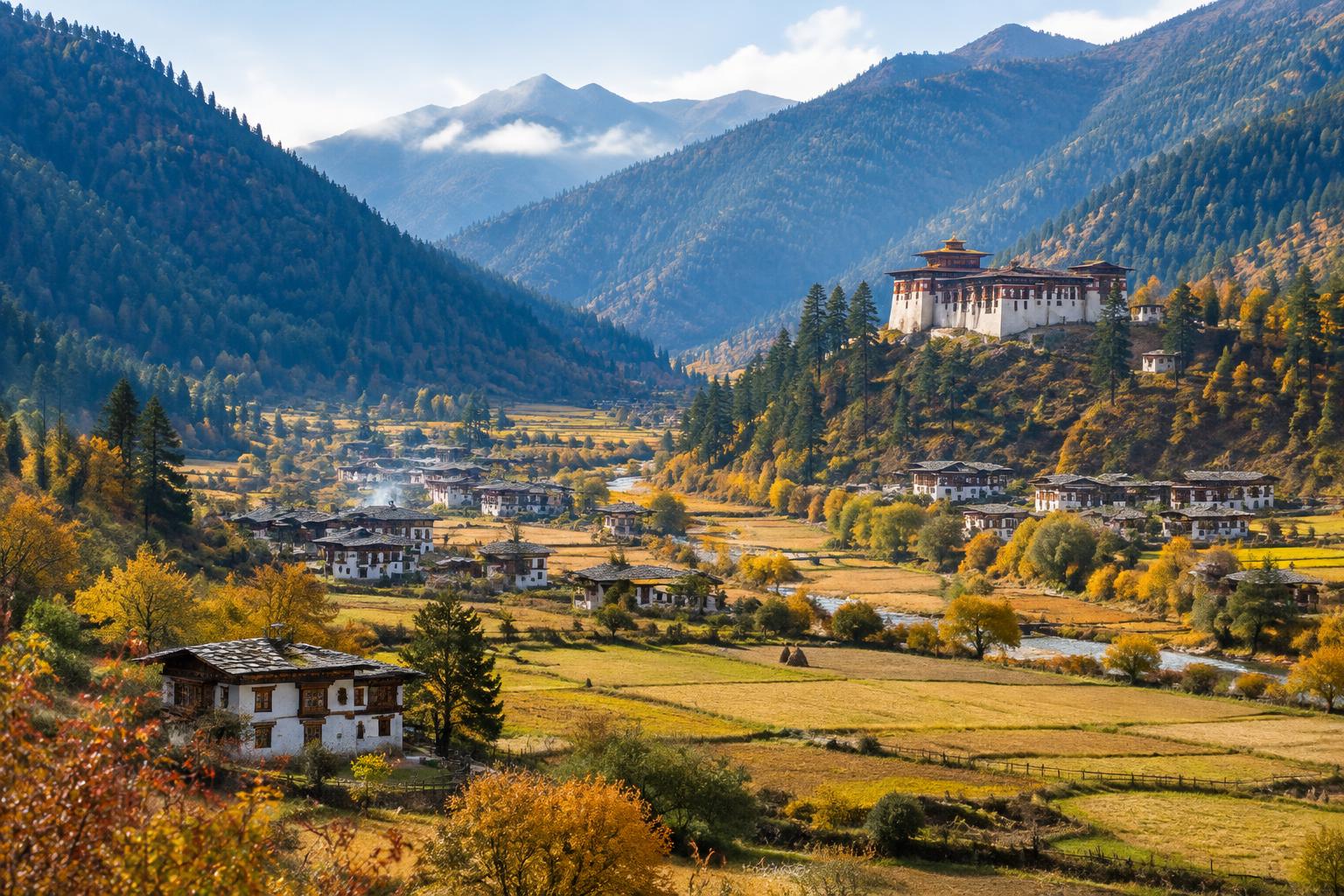
The Land of the Thunder Dragon
About Bhutan
A Himalayan kingdom of fortress-monasteries, prayer flags and valleys that open exactly where the road does.
The country
A kingdom between two giants
Bhutan sits in the eastern Himalayas, wedged between India and Tibet. Barely half the size of the Netherlands but rising from subtropical river valleys to unclimbed seven-thousand-metre peaks, it packs an entire mountain climate into a day's ride.
Until the 1960s Bhutan had no public roads at all — the first road to Trashigang, where our trip begins, opened in the early 1970s. Today the winding mountain highways are among the most scenic (and quietest) riding in Asia, and tourism is deliberately limited to protect what makes the country special.
Fortresses called dzongs dominate every major valley — part monastery, part government seat — and the national dress, the gho for men and kira for women, is everyday wear, not costume.
Capital
Thimphu
King
HM Jigme Khesar Namgyel Wangchuck
Population
≈ 800,000
Language
Dzongkha (English widely spoken)
Currency
Ngultrum (Nu), pegged 1:1 to the Indian rupee
Religion
Vajrayana Buddhism
Highest road pass
Chele La, ≈ 4,000 m
Time zone
UTC+6 (4.5 hours behind Amsterdam)
Practical
On the bike
October is prime season
We ride after the monsoon: clear skies, golden valley floors and mild days. Mornings can be cold at altitude — layers are the answer.
We ride from 200 to 4,000 metres
The east starts low and subtropical; the highest passes (Thrumshing La by bus, Chele La by bike or bus) sit near 4,000 m. E-assist plus a support bus makes the big climbs manageable — take it easy on the first days and let acclimatisation catch up.
The bus is part of the team
Long transfers (Limithang–Thrumshing La, Bumthang–Pele La) are designed for the bus. Nobody is obliged to ride everything.
Practical
Off the bike
Dress for the Dzongs
Shoulders covered and no shorts inside monasteries and dzongs; you'll be asked to remove hats indoors. A light scarf and long trousers cover most situations.
The Sustainable Development Fee
Visitors pay a Sustainable Development Fee of US$100 per night (concessions apply for children), which funds Bhutan's free healthcare and education. Our tour operator handles visas and the SDF — bring a passport valid for 6 months.
Money, phones & power
The Ngultrum is pegged to the Indian rupee; cash is king outside Thimphu and Paro. Tourist SIMs are available at the border and in Thimphu. Power sockets are mostly Type D/F/G — bring adapters.
A different pace
Bhutan measures progress in Gross National Happiness, traffic lights are rare, and many temples close for long lunches. Build in slack — it's part of the experience.
One more thing
We cross the border overland from Assam on day 1 and fly out of Paro on day 15. Keep your passport handy on both days — and check its expiry date now, not in September 2027.