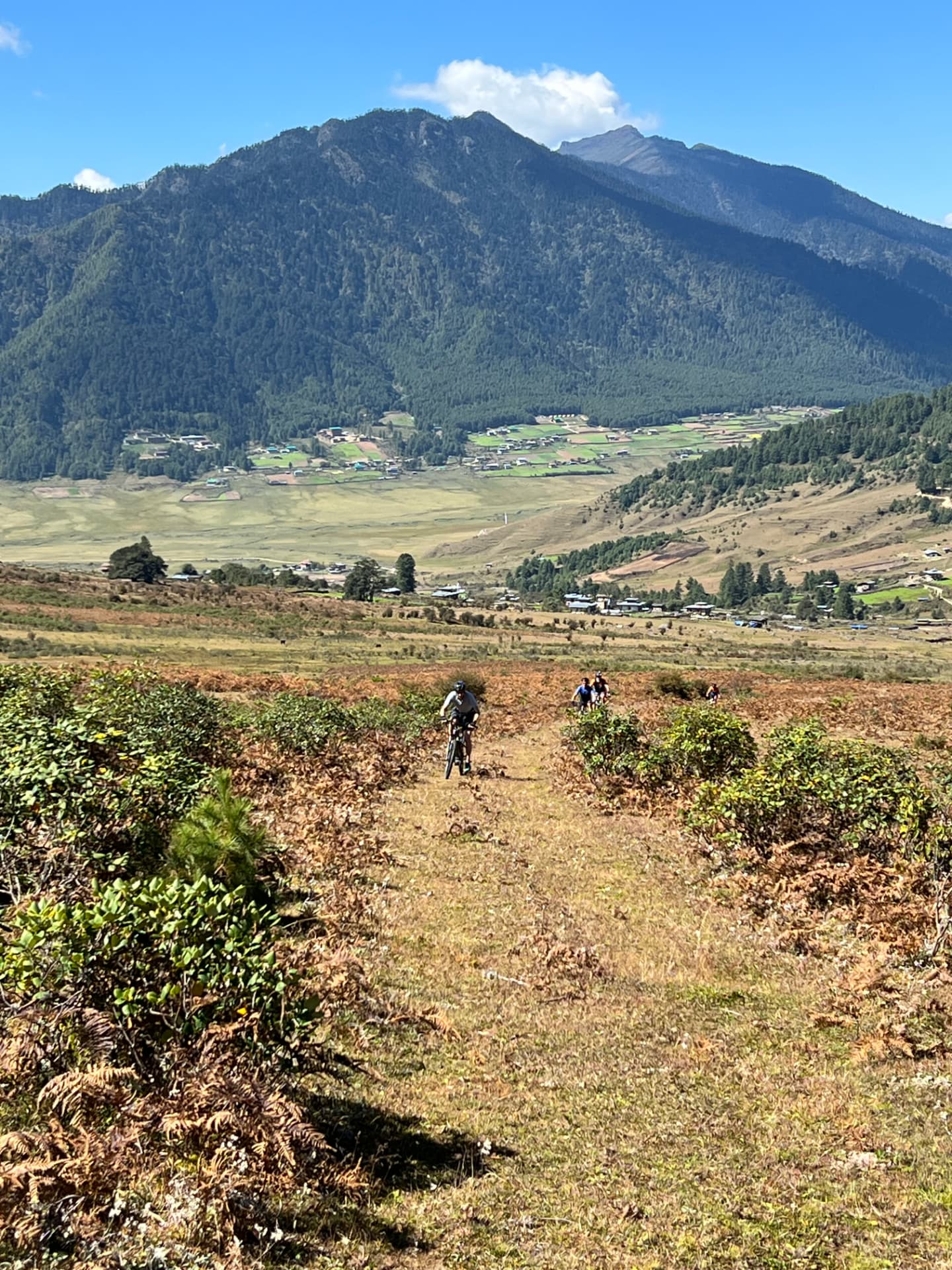
Preparation · twelve months out
Training
Up to five hours a day on a mountain bike, fifteen days in a row, at altitude. Here is how to arrive in October 2027 with the legs — and the backside — for it.
Longest riding day
≈ 4.5 h in the saddle
Highest point
≈ 4,000 m at Chele La
Time to prepare
≈ 53 weeks from now
Daily target
up to 5 h a day
What five hours really asks of you
The honest answer: the fitness is the easy part, and an e-bike makes the climbing half-solved. What actually decides the trip is hours in the saddle — the seat, the hands, the neck, the wrist and the stomach — and the discipline of riding three or four times a week for a year. Lungs catch up in eight weeks. A body that is comfortable for five hours takes a season. So the plan below is not about getting fit; it is about getting used to sitting on a bike for half a day, day after day, and doing it in October, not in a fit of January enthusiasm.
The year
Four blocks to October 2027
Same shape every year, whichever bike you own: build a base, add duration, rehearse the trip, then rest into it.
Oct – Dec 2026 · 12 weeks
1 · Base
Three rides a week, all of them easy enough to hold a conversation. No intervals, no suffering — just hours. The long Sunday ride grows from an hour and a half to two and a half. Add strength work twice a week from the first week, before it ever feels urgent.
Jan – Apr 2027 · 17 weeks
2 · Build
Four rides a week, and the long ride reaches three and a half to four hours. Once a week add hills or short efforts; once a month do a back-to-back weekend — a long Saturday and a second ride on Sunday. Winter is the honest place for this: cold, dark, flat, and boring, and it works.
May – Sep 2027 · 22 weeks
3 · Rehearsal
This is where the trip gets won. Ride five hours twice, and do two-day blocks of four hours plus two. Wear the kit you'll bring, eat what the trip will serve you, and ride the whole plan once on your own saddle. Anything that hurts on a five-hour Sunday will hurt more in Bhutan.
The last 3 weeks of October 2027
4 · Sharpen
Cut the volume by about a third, keep one two-hour ride and one short, brisk one, and stop adding things. Sleep is the training now. Nothing new goes in the bag or on the body — no new saddle, no new shoes, no new tyre, no experiment.
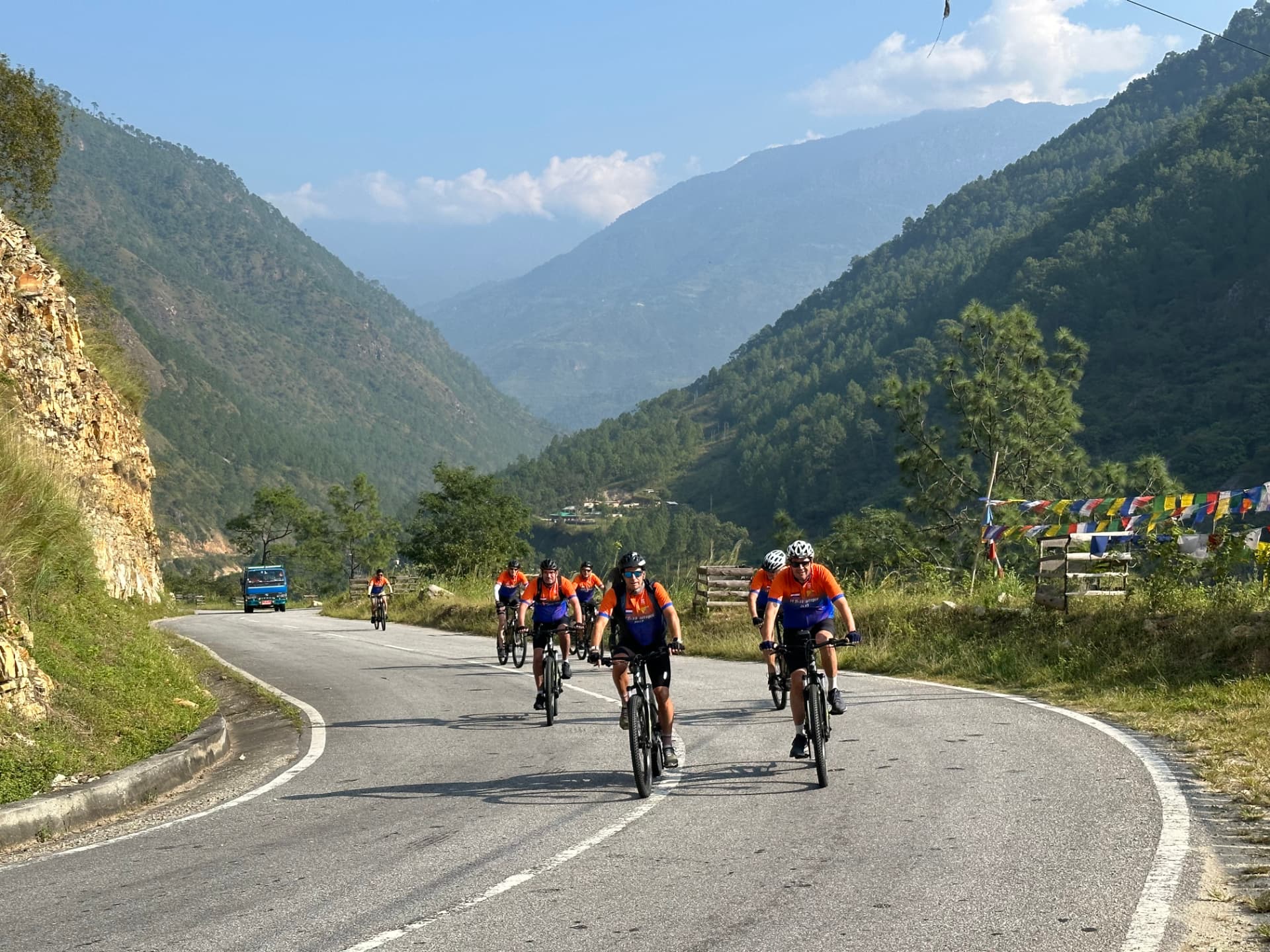
The rhythm
A week in the saddle
Three or four rides, one long one, one rest day you don't negotiate with. Consistency is the whole method.
- MondayRest, or a 30-minute walk and some stretching
- Tuesday60–75 min steady, with 6 × 2-minute harder efforts on a viaduct or into the wind
- WednesdayStrength, 30–40 min — or rest if the legs are talking
- Thursday60–90 min steady, conversational pace, no heroics
- FridayRest
- SaturdayThe long ride: 2.5–4.5 h, mostly steady, eating and drinking as on the trip
- SundayOptional second ride, 1.5–2 h — this rehearses the trip's consecutive days
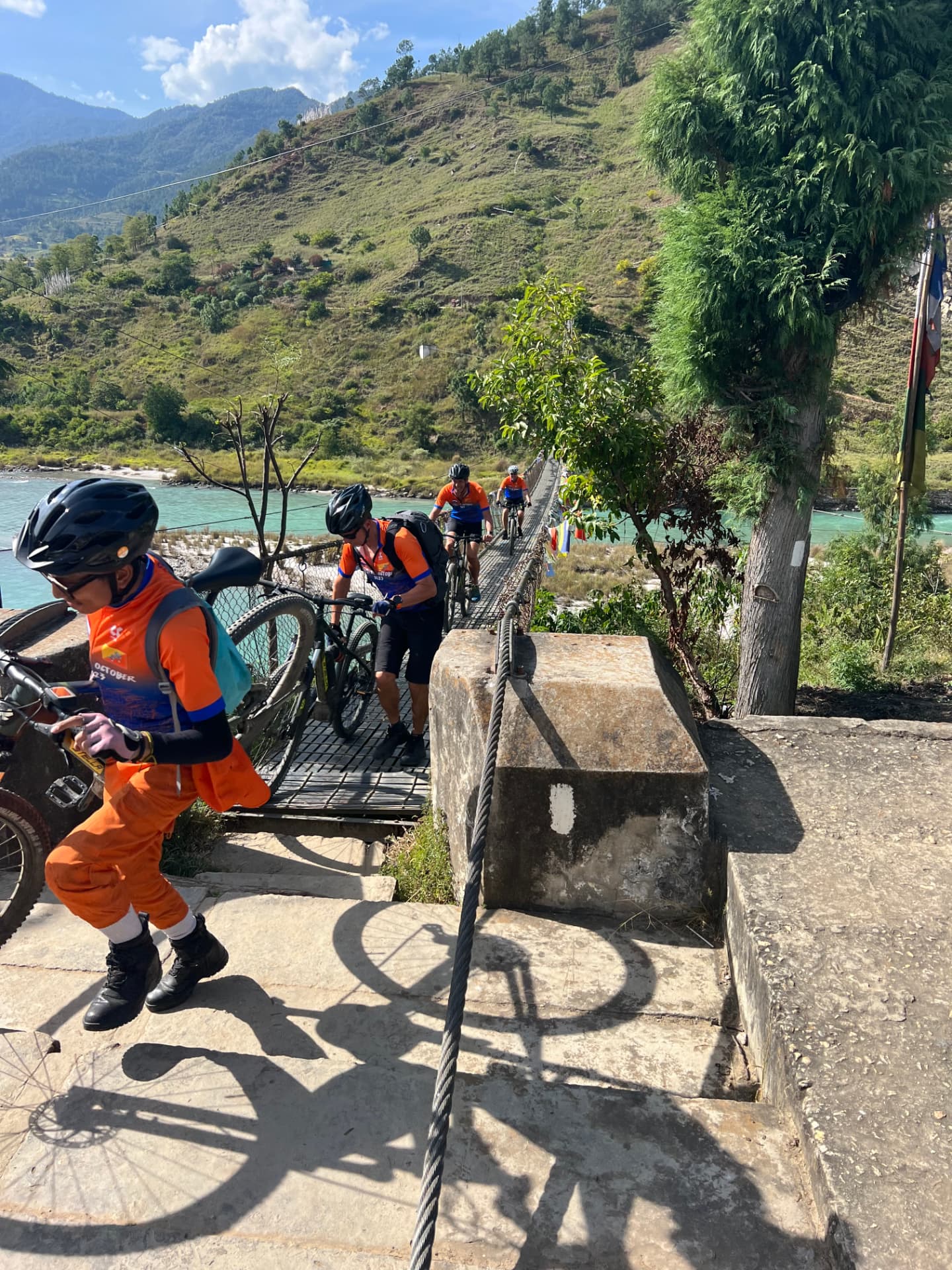
The test
How you'll know you're ready
No lab, no power meter required. Tick these off in the weeks before departure and the trip is yours.
- ✓Three rides a week, kept up for eight weeks without a broken streak.
- ✓A four-to-five-hour ride, done twice in the month before departure.
- ✓A back-to-back weekend: four hours Saturday, two hours Sunday — twice.
- ✓A week of 150–200 km in the saddle, comfortably, without a sore back the day after.
- ✓A long, steady climb where you can still talk in short sentences.
- ✓No knee, hip or lower-back pain that carries over into the next morning.
- ✓Twenty-plus hours on the saddle you're actually bringing, gel cover fitted and tested.
- ✓A house-doctor check-up before you started, and a plan for any medication you take.
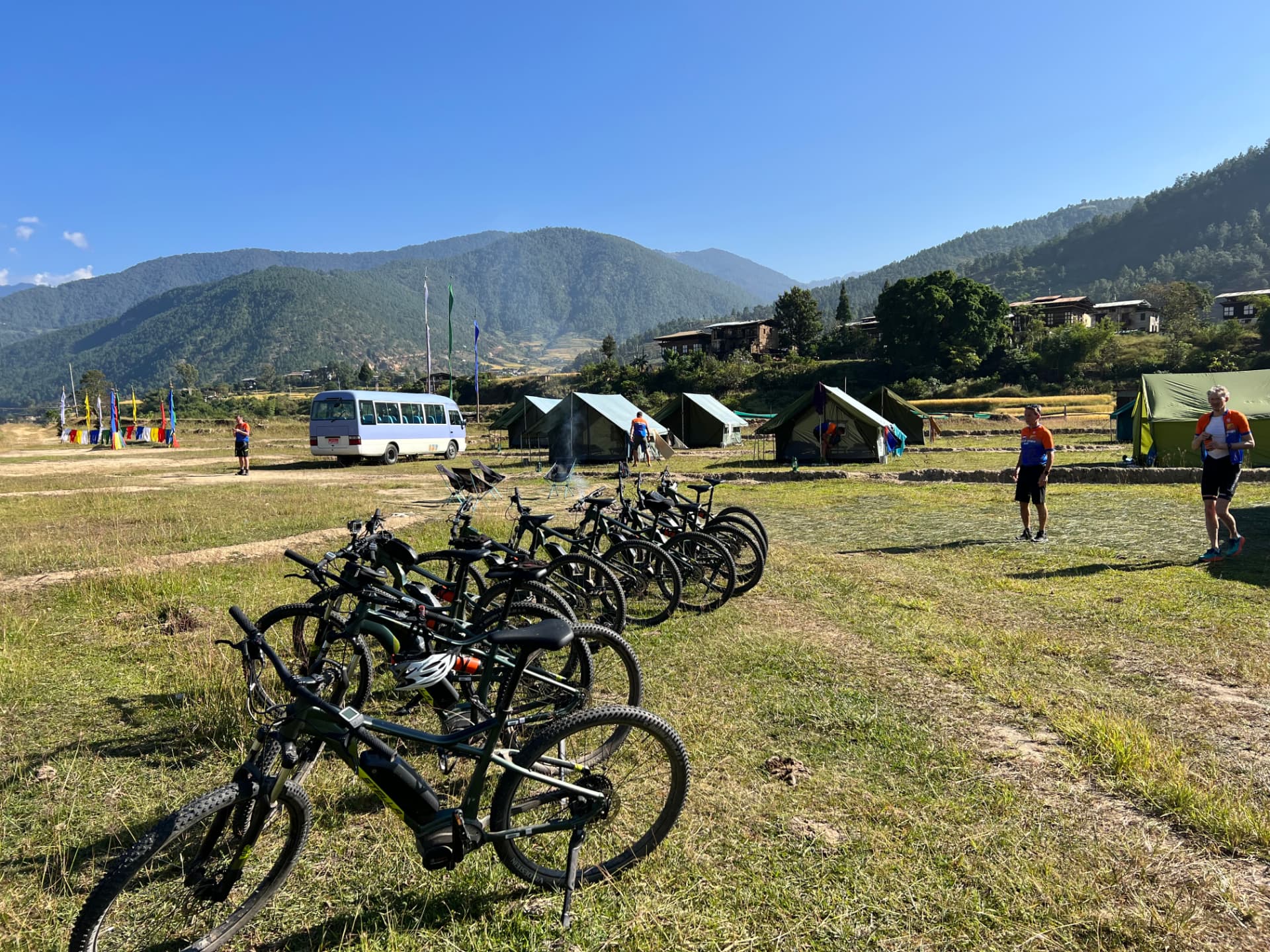
The fourth discipline
Fuel
Most bad days on a long tour are a hunger and thirst problem, not a fitness problem.
Eat before hunger
Four to six hours of riding burns more than a lunch can replace. Aim for 60–90 g of carbohydrate an hour — a banana, a flapjack, a gel, whatever you actually like — and start within the first half hour, not when the well runs dry.
Drink before thirst
500–750 ml an hour, more on a hot valley day, plus rehydration salts when you're sweating hard. Dehydration at altitude feels like a bad day rather than a problem — and it is the problem.
Rehearse the menu
Train your stomach on training rides with the same things the trip will offer: farmhouse lunches, a flask, the snacks in your pocket. A gut that only knows breakfast and dinner will complain on day five.
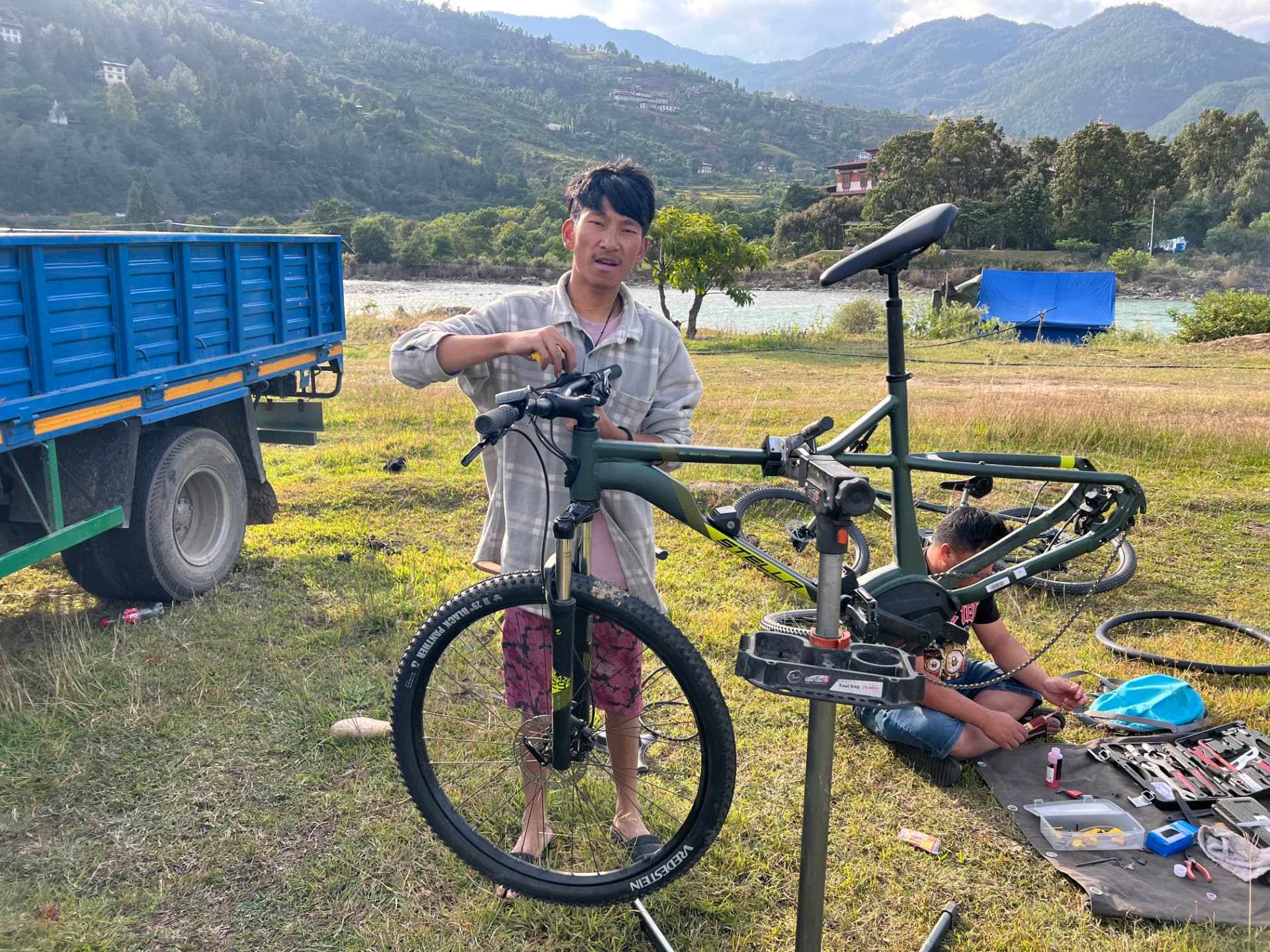
Twice a week, thirty minutes
Strength
The gym is where you protect the body that the bike slowly wears down. Not to failure — to repeatable.
One leg at a time
Split squats, step-ups and lunges, 8–12 reps, three sets. Every pedal stroke is a single-leg effort, and balance on rough ground lives or dies here.
Hips and glutes
Bridges, clamshells and side planks. A stable pelvis on the saddle means the knees and lower back never have to do a job they weren't built for.
A braced trunk
Planks, dead bugs and Pallof presses. On five-hour days, a tired trunk turns into aching hands, a numb neck and shoulders that can't hold the bars.
Calves, ankles, back
Calf raises and a few minutes of thoracic rotation and hip-flexor stretch. Ankle and upper-back mobility decide whether you sit on the bike comfortably or fight it.
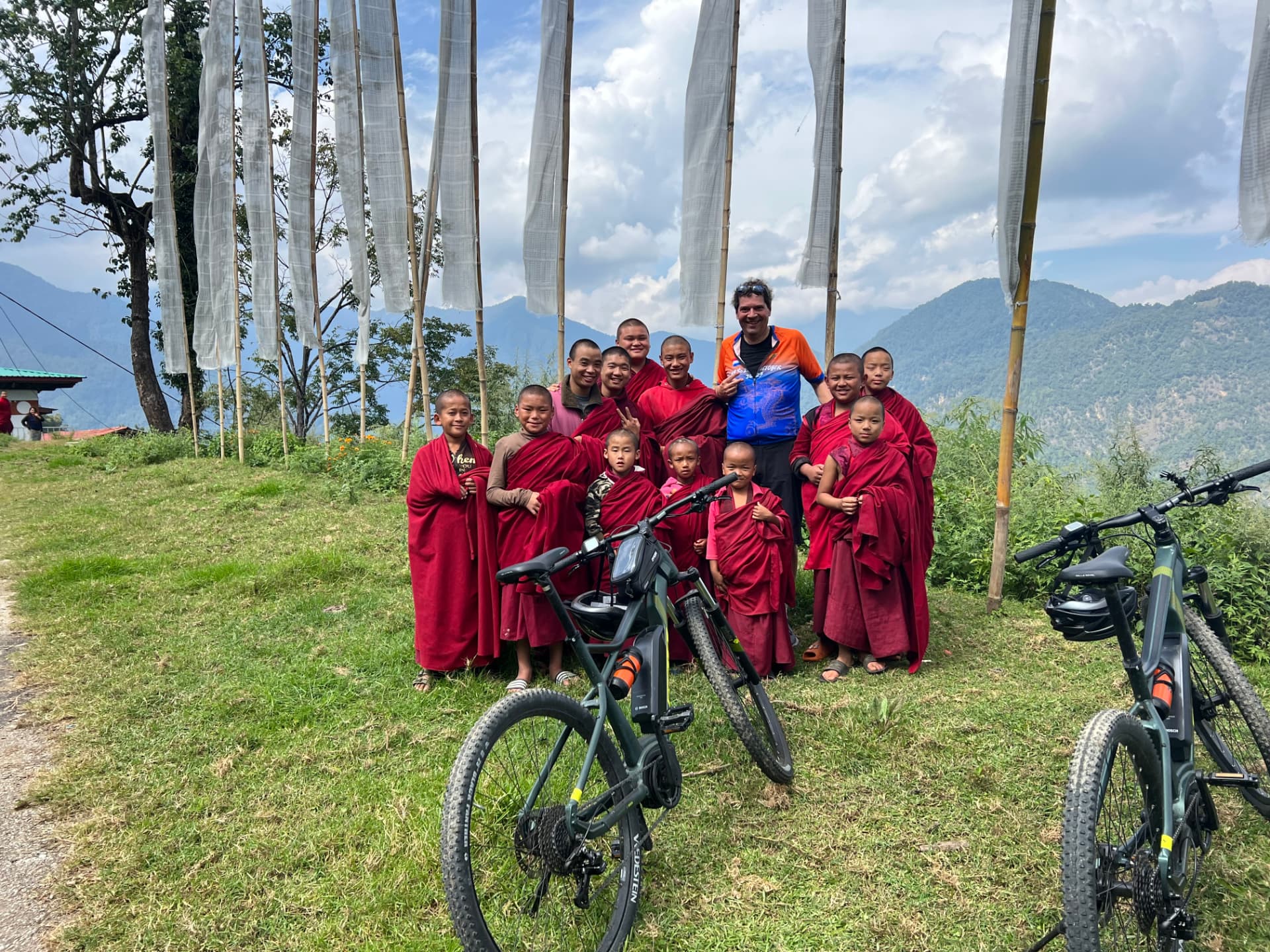
In a flat country
Training where there are no mountains
The Netherlands is not a disadvantage, it is just a different gym.
The headwind is your hill
Ride out into the wind and home with it behind you. Twenty minutes of hard wind work does what a climb does for the legs, and there is no shortage of it in the Netherlands.
Viaducts, looped
The ramps, dikes and viaducts give you a three- to five-minute climb if you loop them. Repeat rather than seek gradient — the point is ten minutes of sustained effort, not a mountain.
One hill weekend a month
An Ardennes or Eifel weekend, or the home trainer on a gray Sunday. Steady climbing in a low gear is the closest thing to Bhutan you can buy a train ticket for.
Turn the dial down
Your own e-bike is a training machine: drop the assistance one notch and it becomes a heavier bike with a gentler gradient. Same route, more work, no extra travel.
The one thing you can't train for
The passes reach roughly 4,000 metres and the bus crosses Thrumshing La at nearly 3,800. The motor carries you up, which is why this trip is possible at all — but thin air still takes the edge off your breathing, your sleep and your appetite for the first days. What you can do: keep effort steady rather than sharp at height, drink more than feels natural, and arrive well rested rather than freshly exhausted. Anyone who wants to take the altitude seriously can ask a house doctor about arriving a few days earlier to sleep low and ride easy.
Two rules before you start
First: consistency beats heroics. Three unremarkable weeks a month carry you to Bhutan; one spectacular week and two skipped ones do not. Second: nothing gets tested for the first time on the trip — the saddle, the shoes, the shirt, the snacks and the sunglasses have all been ridden before October 2027.